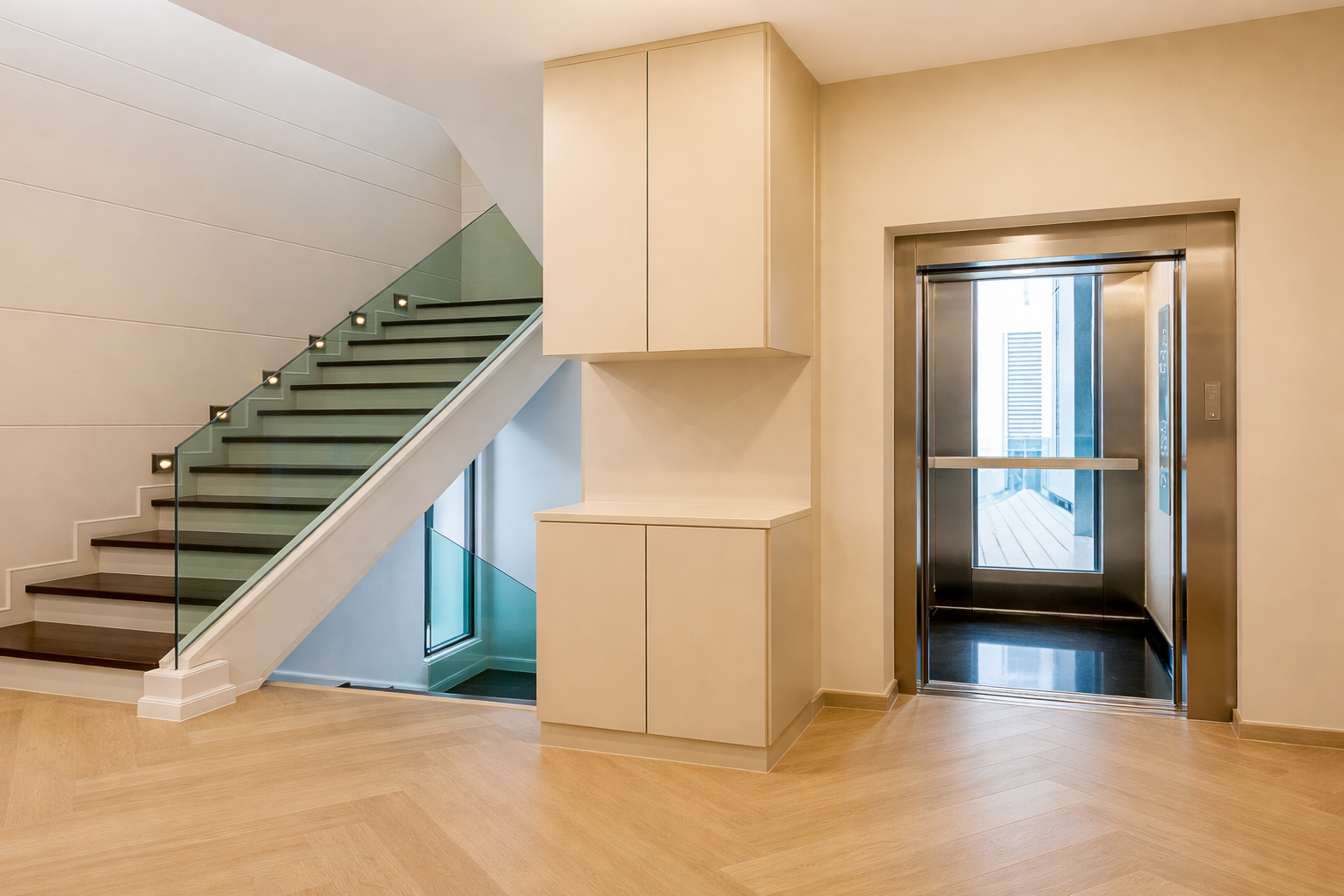
In the current market, there are 4 main home lift systems offered in Malaysia. Each system comes with benefits and trade-offs. Therefore, it is important that you know what you want and limitation surrounding your decisions. If you remain under, check out our [Home Lift Check List].
- Hydraulic
- Traction
- Screw & Nut
- Vacuum
In this article, we will provide brief understanding and breakdown of each system for the ease of your reference.
(a) Hydraulic System
How does it work?
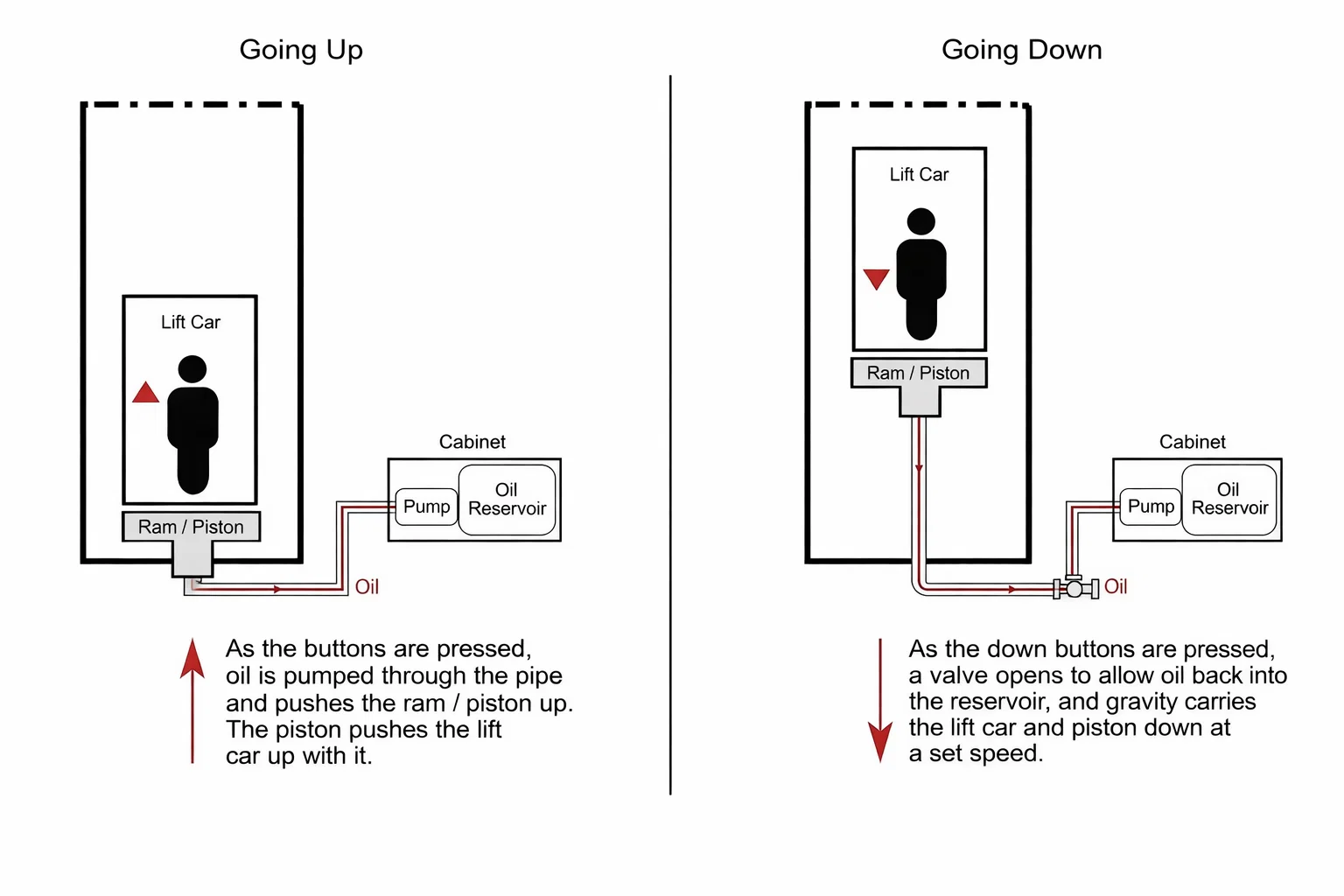
A home hydraulic lift operates using a fluid-powered pump and piston system where an electric motor dries oil from reservoir into a cylinder, pushing a piston upward to lift the cab. As the motor turns on the pump, moving oil into the cylinder raises the elevator cabin. For descending, the pump stops and the valve opens, allowing the weight of the cabin to push the oil back into the reservoir.
Benefits:
- Domestic hydraulic lifts are suitable for small spaces as the machinery and running equipment are kept separately in a cabinet or floor area.
- Due to wide shared knowledge technical knowledge, domestic hydraulic lifts usually present itself as the cheapest solution.
- In the event of a mechanical failure, a sudden free-fall is highly unlikely. The lift’s descend is controlled by the hydraulic system and the speed is limited by how quickly hydraulic oil is allowed to flow through the valves.
Trade-offs
- Overtime, due to the mechanics of hydraulic lift, it may cause oil leak within the cabinet or where the running equipment is located.
- Over an extensive period of usage, hydraulic system can be less of a smooth ride compared to other systems.
- Some users experience slight smell emission from the warm oil during operations.
(b) Traction
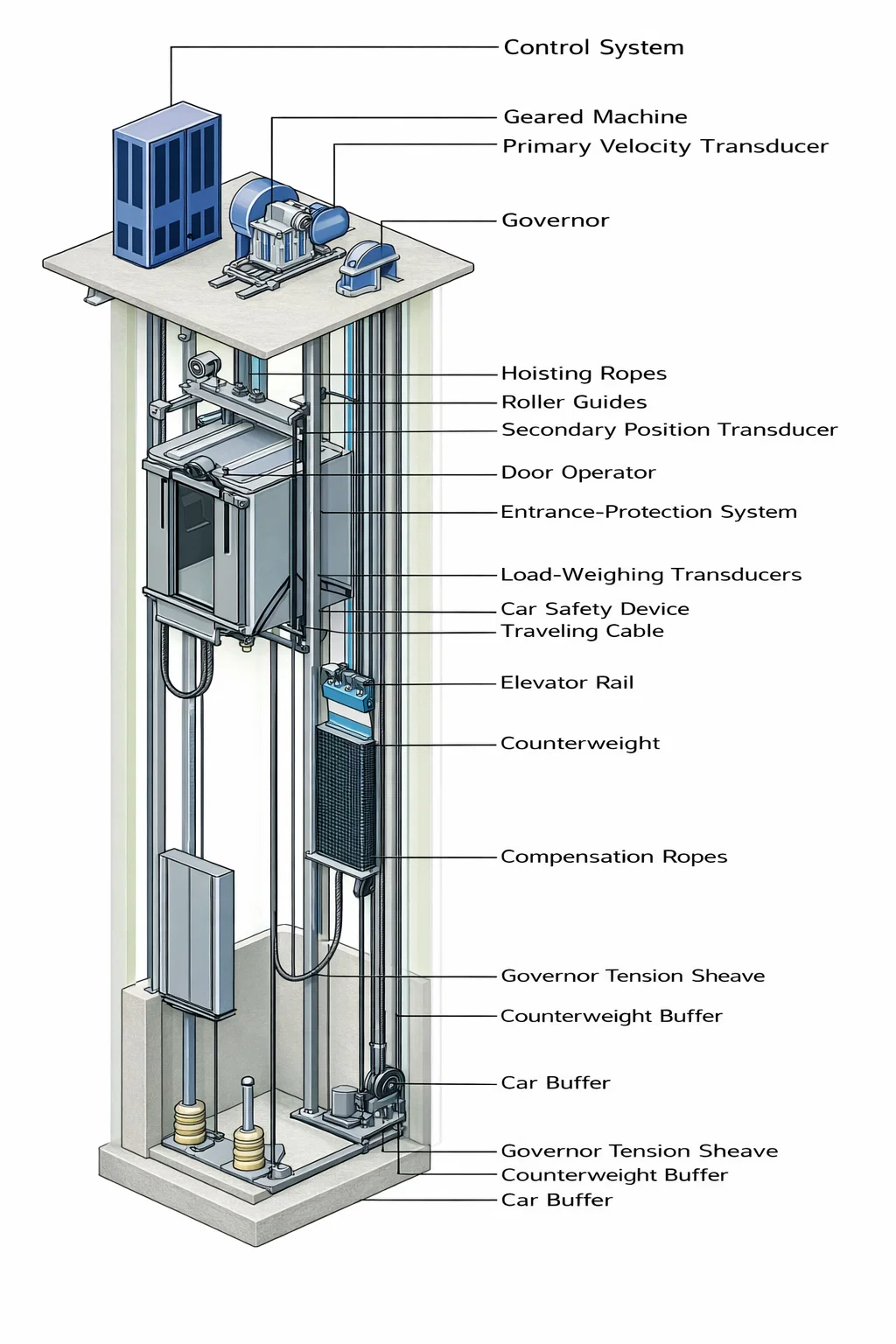
Traction lifts are efficient vertical transportation system using counterweight with steel ropes or belts and a sheave. Under this system, there are generally two types of traction lift namely – gearless traction elevator and geared traction elevator.
Benefits:
- Traction lifts are built to carry heavy loads with high usage frequency compared to other home lift systems. This type of system will be suitable for homes with 4-5 stories.
- The key benefit of traction lift compared to hydraulic is its ride. Traction provides smooth and comfortable mobility as the cable-driven system ensures stable and refined experience for passengers.
- With the advancement of technology, traction lifts offer wide variety of customizable sizes based on individual’s needs and wants.
Trade-Off
- The upfront cost for traction lift is the highest cost compared to the rest of the system. The reason for the hefty cost is due to the construction cost for the shaft and the price of the cabin.
- Traction lifts generally require a longer installation period compared to other systems, due to the more complex installation process involved.
- Traction lifts generally involve more complex maintenance, as they use a combination of motor, cables and control systems that require regular inspection and servicing.
(c) Screw and Nut System
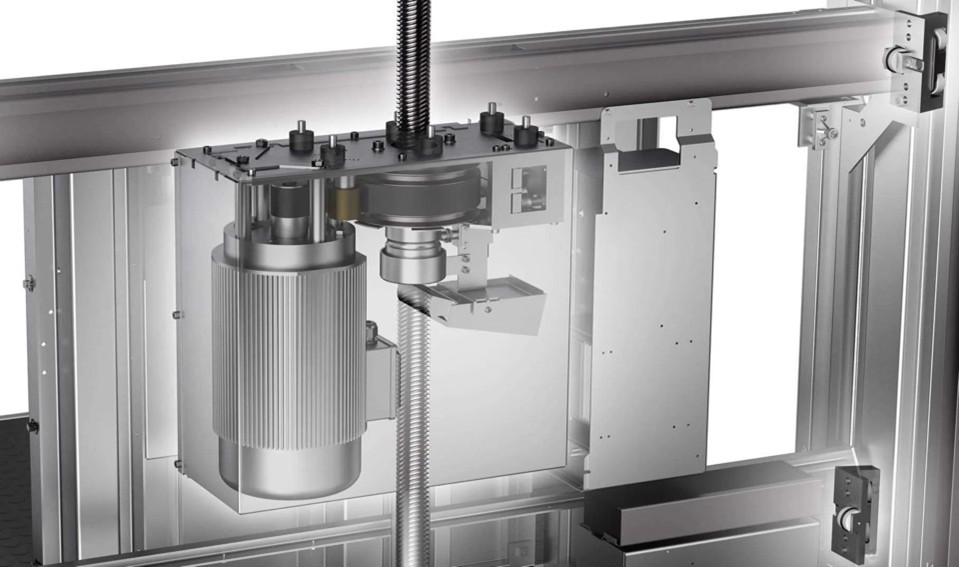
A screw and nut elevator system is a vertical transportation solution that relies on electric motor rotating a nut along a fixed vertical screw raising and lowering the lift. This is primarily used in low-rise residential buildings. Unlike hydraulic or traction that travels in a cabin, screw and nut elevator lifts platform. Some may refer this as the “platform lift”.
Benefits:
- This system has small footprint with no requirement of shaft or motor room. This system is often most suited to be installed inside an existing home or homes with limited space allocation.
- Compared to other systems, screw and nut lifts typically require short construction time and lower construction costs as they are designed to be more self-contained and require minimal structural work.
- Screw and nut lifts use a mechanical self-locking mechanism, where the platform is physically supported by the screw itself. This design prevents uncontrolled descend.
Trade-Offs:
- The travel speed operates at a relatively slower speed compared to hydraulic or traction elevator.
- Due to the nature of the system, the load capacity is typically limited to around 400kg.
- As the system is self-contained, some operational noise from the mechanism may be noticeable during use.
(d) Vacuum System
Vacuum system is also sometimes referred to as pneumatic elevator. This system is self-supporting residential lifts that use air pressure differential to move a car up or down within a vertical cylinder.
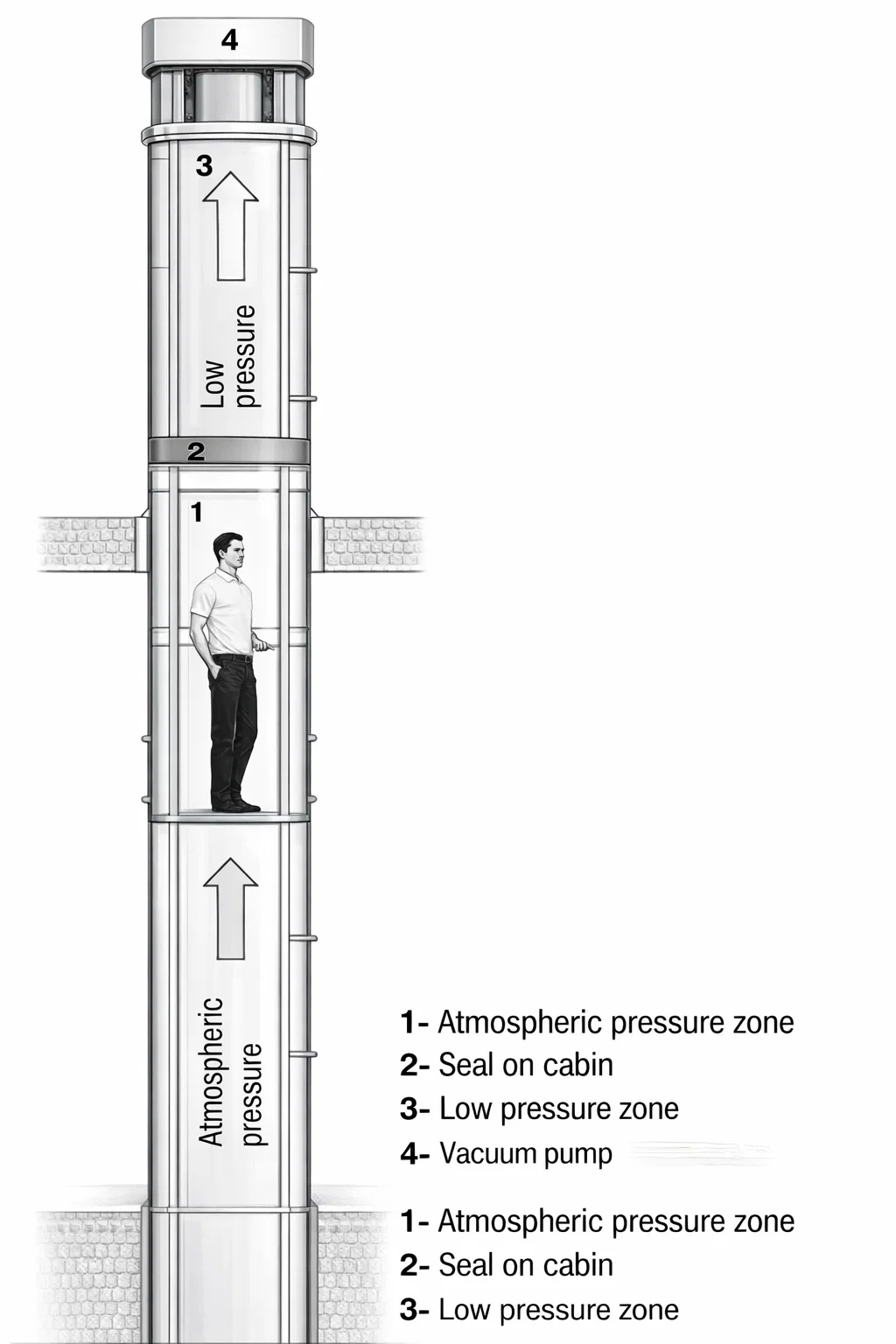
Benefits:
- This elevator is the most energy efficient system compared to the other systems as it consumes electricity only when ascending; relying on gravity to handle the descend.
- Installation typically takes 2-3 days (excluding fabrication), as the system uses relatively few components and requires minimal assembly.
- Unique and distinctive compared to other systems as pneumatic lifts are usually sold in the shape of cylinder.
Trade-off:
- Due to their design, vacuum lifts typically have lower load capacities and more compact cabin sizes, which may not be suitable for multiple passengers or accommodation of wheelchair.
- Comparing with other systems, vacuum system is a relatively new lifting technology.
- Vacuum lift safety relies heavily on maintaining proper air pressure. Over time, if not maintain property, seals and gaskets may wear and require inspection or replacement to ensure consistent performance.
Summary
| Price of Elevator | Construction Involved | Space Required | Maintenance Cost | |
| Hydraulic | $ | *** | *** | $$ |
| Traction | $$$ | **** | **** | $$$ |
| Screw & Nut | $$ | ** | ** | $$ |
| Vacuum | $ $$ | * | * | $$ |